I led design of an energy switching product. We conducted a comprehensive discovery to understand user needs, facilitated brainstorming workshop, designed the interface, and supervised build. The resulting product had an average SUS of 83 and accommodated 200 switches per month, with 600k active users.
Discover
We started with examining existing data from MoneySuperMarket’s energy switching product and conducted extensive desk research to understand what challenges users experience when switching energy. We also collaborated with marketing and data teams to understand wider market forces at play and understand the viability, feasibility, and desirability of the opportunity.
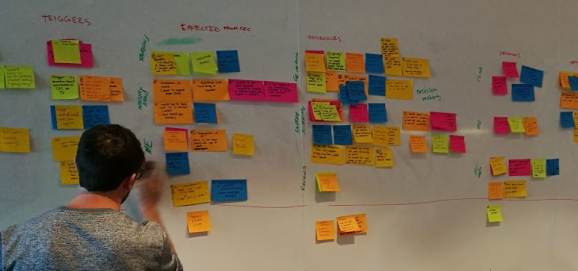
We supplemented the desk research with a series of in-depth interviews to understand granular user needs and pain points around energy switching. We found that:
- automated switching services do not take into account preferences beyond “Price” meaning that users feel not in control,
- automatic switches based on price only sometimes result in poor customer experiences as energy companies chasing low price cannot compete with more sustainable competitors,
- several participants reported being switched multiple times per year, resulting in frustration and unnecessary stress
Based on this insight and behavioural characteristics of our sample we created several user archetypes, a log of user needs, and an “as-is” user journey map.
Relevant skills: Discovery research, user needs, user journey mapping, user archetypes, qualitative analysis, workshop facilitation, quantitative market analysis, innovation management.
Design
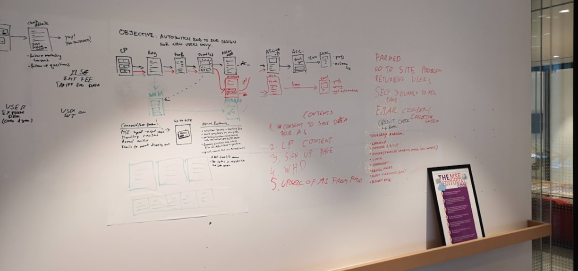
We ran several workshops to co-design the new user journey. We used a range of methods. For example, in one instance we ran a mini-“design sprint”, which was a 4 hour workshop where we examined research findings, created ‘How Might We’ questions and sketched ideas with Crazy 8s.
We relentlessly tested user preferences with remote unmoderated card sorting. We learned that control is a strong motivator. People feel in control when they get a say when to switch, they feel reassured when they are switched to a reputable brand, and they feel like winners when they switch to a cheaper deal.
Relevant skills: Card sorting, HMW questions, Crazy 8s, workshop facilitation, stakeholder management, visioning, design sprint.
Prototype
We continued testing and iterating our prototypes. We started with simple paper prototypes (on paper) and moved through the levels of fidelity (Sketch, Axure, then Vue.js) as our understanding of the final solution developed. Most of the testing was unmoderated in UserZoom but we ran quarterly usability benchmarking sessions in person where we tracked usability metrics like time on task and our usability benchmark (System Usability Scale) to provide objective measure of design changes.
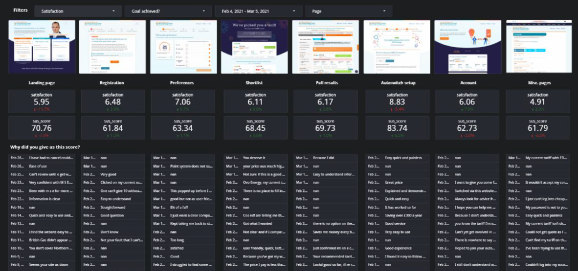
As the cycles of testing and iterating progressed I worked closely with the Performance Analytics team to develop a measurement framework. My passion for usability helped me introduce and integrate the Google HEART framework to correctly attribute UX changes to revenue. The resulting dashboard, which I developed leveraging my skills in Python and understanding of Google Analytics, is still used to this day.
Relevant skills: Prototyping (Azure, Sketch, HTML/CSS), usability testing, KPI creation, measurement frameworks, Google HEART, Python, performance analytics.
Develop
During the development phase we worked in dual-track Agile with the engineers. Designs were created, validated, and finalised one sprint ahead, following a pre-determined and prioritised roadmap in JIRA.
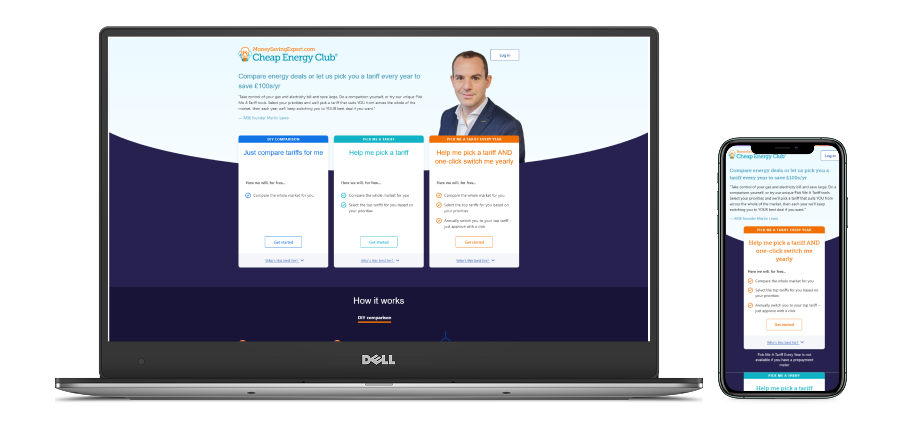
The final product reached 200 switches in the first month, and had 600k unique users by the end of the quarter. We captured continuous feedback from the dashboard I created, which was connected to a contextual survey on site allowing users a quick and easy way to provide qualitative feedback.
Relevant skills: contextual surveys, dual-track Agile.