Tag: Discovery

  • A discovery in healthcare

    A discovery in healthcare

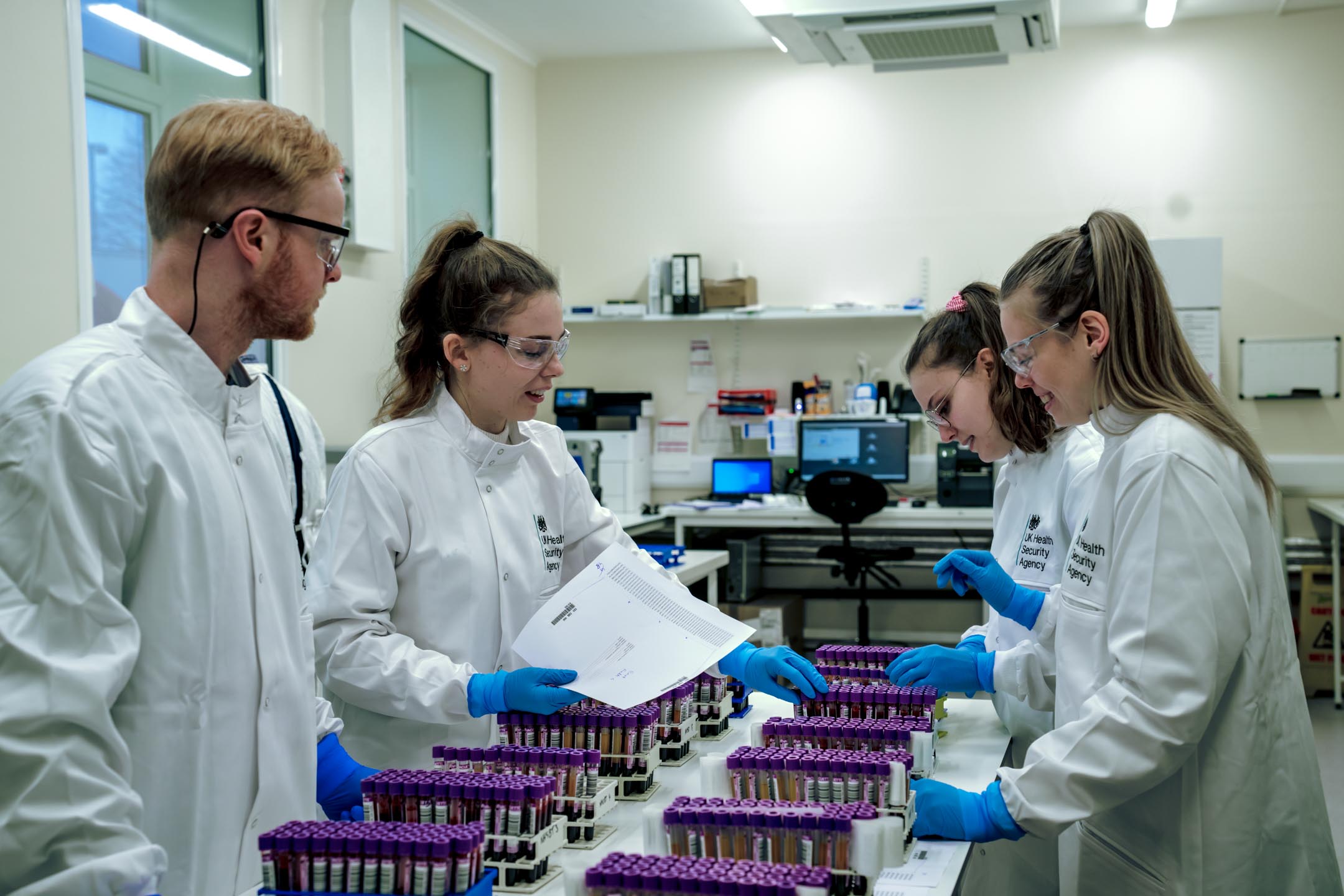
    We worked with the UK Health Security Agency to identify opportunities to improve the Measles Surveillance Pathway. Navigating internal politics and ethical considerations, I led a team to plan and conduct a Discovery. We identified £800k in estimated efficiency savings through automation and process improvement.

    I stood up a team to lead a Discovery phase into the Measles Surveillance Pathway at UK Health Security Agency (HSA). Navigating complex organisational and policy landscape our team successfully interviewed 35 Health Protection Team (HPT) members. We produced 75+ insights, 4 user archetypes, fed into a creation of the “to-be” service blueprint.

    Situation

    Measles Surveillance is a complex pathway where multiple teams must work together to produce accurate data about the measles cases in the UK. For this the Health Security Agency, responsible for all health related threats to the UK security, created the current “pathway”. It is supported by multiple regional Health Protection Teams, responsible for day to day health of their respective regions.

    When a measles case is suspected (by a doctor, or a school nurse, or another healthcare practitioner) a report is made to the local HPT. The local HPT investigates, conduct any necessary follow ups (usually in the form of an oral kit sent to the patient), and send the samples off to a lab. If a measles case is confirmed necessary interventions are made.

    Task

    Our team was brought to conduct generative research with HPTs to understand their pain points and needs, and to identify opportunities to increase efficiency and oral fluid kit (OFK) return rates.

    Approach

    We opted for in-depth interviews as the most pragmatic approach. Surveys, contextual inquiries, and focus groups were considered but rejected due to time, budget, or organisational constraints.

    There were several challenges the team had overcome while working in this regulation heavy environment with low UX-maturity.

    1. Organisational resistance

    Due to the decentralised nature of the regional HPTs it wasn’t immediately obvious who to contact about recruiting participants for our interviews; additionally there seemed to be negative sentiment from the HPTs about the governing HSA; a relatively new department that came to replace the old Public Health England.

    To avoid further delays we went to the source. We contacted HPT team leads directly and asked them to attend an introduction meeting with us. During this meeting we explained the nature of the research and what we were trying to achieve.

    While the immediate resistance was overcome, and we got our recruitment emails out to the teams, the negative sentiment remained throughout. We navigated this by making our intentions and the nature of our research clear upfront in the information sheets we produced.

    Relevant skills: managing consent, stakeholder management, relationship building, influencing, advocating for research.

    2. Stakeholder resistance

    Our first draft of the plan was met with scepticism. Stakeholders from clinical and academic backgrounds felt our epistemology was lacking and our approach was not robust enough to give the insights any confidence or weight. These stakeholders were initially not available for conversation and it took some time before we got everyone in the room together.

    During our conversation I had a chance to educated them about UX research and how it’s different. How the scope and the objective of the research differs from academic or clinical research, for example. I steered the conversation away from NHS Ethics Board Reviews and more towards collaborative workshops and solving a challenge together. This was successful in getting buy-in and unblocking our path forward.

    Relevant skills: advocating for research, stakeholder management.

    3. Data protection concerns

    No Data Protection Impact Assessment was conducted prior to the research team coming onboard. This delayed us significantly. However, I worked with the senior leadership and Quality, Risk, Mitigation (QRM) colleagues to get a Data Protection Agreement (DPA) in place.

    Relevant skills: data protection regulations.

    Result

    As a result of my advocacy and strong stakeholder management skills we conducted 35 interviews with HPT members. Participants, once they understood what we were trying to achieve, were helpful and open, providing rich insight into their daily lives, frustrations, and needs. The final report, containing 4 personas, 9 efficiency saving concept designs, and 1 “to-be” service blueprint, was well received by the client and was used to plan an Alpha phase in the future.
  • Marine Licensing Discovery

    Marine Licensing Discovery

    Situation

    A government department’s ambition was to transform its marine licensing service. The complexity of the process, ministerial oversight, and several failed attempts in previous years made this a challenging environment that required careful stakeholder management and ambiguity around recruitment.

    Task

    The team was tasked with conducting a standard Discovery to understand the current process, and identify opportunities, pain points, and behaviours. A report of our recommendations and early concepts was to be presented to the government ministers who would issue budget for the next phase of work.

    Actions

    As a small and agile research team we worked closely with Product, Design, and Delivery, to plan and execute the research in record time.

    To make sense of the departmental context I conducted several in-depth research kick-off workshops that challenges the client to think about their assumptions. These assumptions were then turned into testable hypotheses and success measures.

    We used generative AI to quickly conduct desk research and review 50+ sources for key themes and existing insight.

    We then conducted interviews with a complex network of service users and stakeholders, mapping the process as we went. We produced lean personas, process maps, and ‘as-is’ service blueprints.

    Recruitment included:

    • Stakeholders (e.g., port authorities, scientific organisations, and other government departments) that were recruited using snowball recruitment through word of mouth and existing relationships.
    • Service users (e.g., engineers and building company leaders applying for a licenses) that were recruited using a third party recruiter.

    Result

    We spoke to 10+ service users and 5 stakeholders. The final report, which included 30+ insights and recommendations, along with a “to-be” service blueprint and several concepts and hypotheses for future testing, was presented to the small project team and a clean version was produced for ministerial scrutiny.

    The department was successful at securing the funding and proceeding to a longer Alpha phase.

  • Cheap energy club

    Cheap energy club

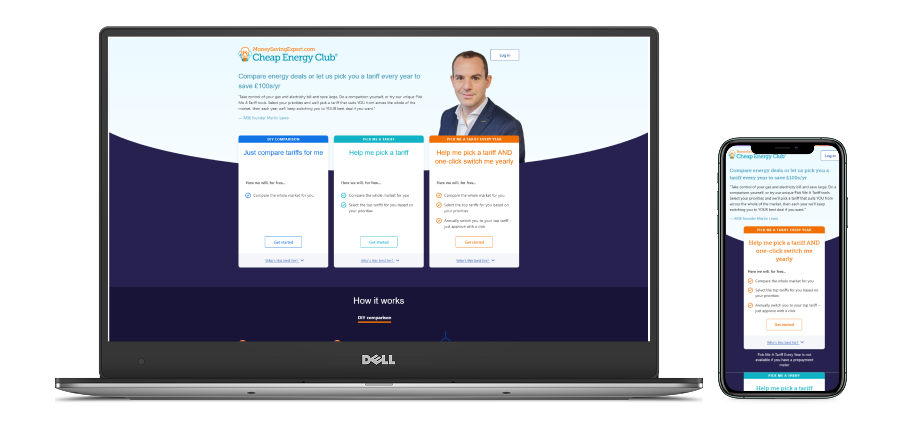
    I led design of an energy switching product. We conducted a comprehensive discovery to understand user needs, facilitated brainstorming workshop, designed the interface, and supervised build. The resulting product had an average SUS of 83 and accommodated 200 switches per month, with 600k active users.

    Discover

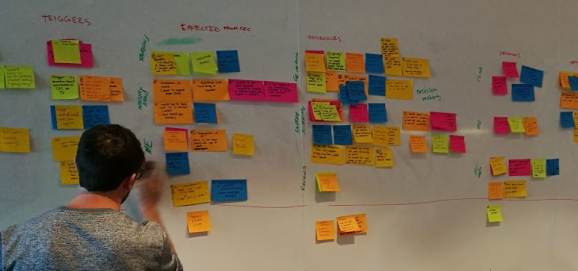
    We started with examining existing data from MoneySuperMarket’s energy switching product and conducted extensive desk research to understand what challenges users experience when switching energy. We also collaborated with marketing and data teams to understand wider market forces at play and understand the viability, feasibility, and desirability of the opportunity.

    We supplemented the desk research with a series of in-depth interviews to understand granular user needs and pain points around energy switching. We found that:

    • automated switching services do not take into account preferences beyond “Price” meaning that users feel not in control,
    • automatic switches based on price only sometimes result in poor customer experiences as energy companies chasing low price cannot compete with more sustainable competitors,
    • several participants reported being switched multiple times per year, resulting in frustration and unnecessary stress

    Based on this insight and behavioural characteristics of our sample we created several user archetypes, a log of user needs, and an “as-is” user journey map.

    Relevant skills: Discovery research, user needs, user journey mapping, user archetypes, qualitative analysis, workshop facilitation, quantitative market analysis, innovation management.

    Design

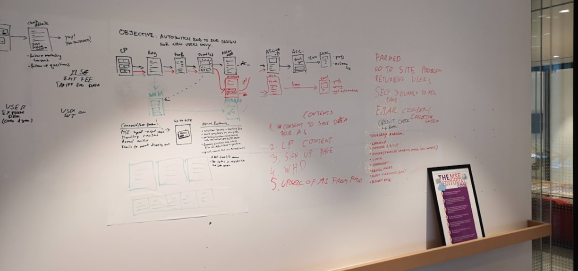
    We ran several workshops to co-design the new user journey. We used a range of methods. For example, in one instance we ran a mini-“design sprint”, which was a 4 hour workshop where we examined research findings, created ‘How Might We’ questions and sketched ideas with Crazy 8s.

    We relentlessly tested user preferences with remote unmoderated card sorting. We learned that control is a strong motivator. People feel in control when they get a say when to switch, they feel reassured when they are switched to a reputable brand, and they feel like winners when they switch to a cheaper deal.

    Relevant skills: Card sorting, HMW questions, Crazy 8s, workshop facilitation, stakeholder management, visioning, design sprint.

    Prototype

    We continued testing and iterating our prototypes. We started with simple paper prototypes (on paper) and moved through the levels of fidelity (Sketch, Axure, then Vue.js) as our understanding of the final solution developed. Most of the testing was unmoderated in UserZoom but we ran quarterly usability benchmarking sessions in person where we tracked usability metrics like time on task and our usability benchmark (System Usability Scale) to provide objective measure of design changes.

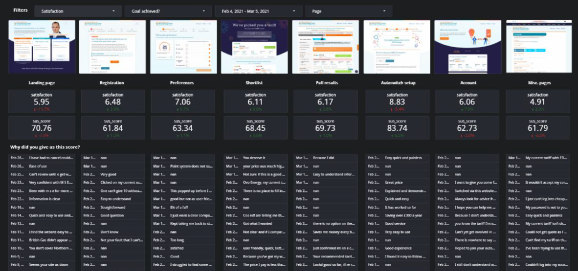
    As the cycles of testing and iterating progressed I worked closely with the Performance Analytics team to develop a measurement framework. My passion for usability helped me introduce and integrate the Google HEART framework to correctly attribute UX changes to revenue. The resulting dashboard, which I developed leveraging my skills in Python and understanding of Google Analytics, is still used to this day.

    Relevant skills: Prototyping (Azure, Sketch, HTML/CSS), usability testing, KPI creation, measurement frameworks, Google HEART, Python, performance analytics.

    Develop

    During the development phase we worked in dual-track Agile with the engineers. Designs were created, validated, and finalised one sprint ahead, following a pre-determined and prioritised roadmap in JIRA.

    The final product reached 200 switches in the first month, and had 600k unique users by the end of the quarter. We captured continuous feedback from the dashboard I created, which was connected to a contextual survey on site allowing users a quick and easy way to provide qualitative feedback.

    Relevant skills: contextual surveys, dual-track Agile.